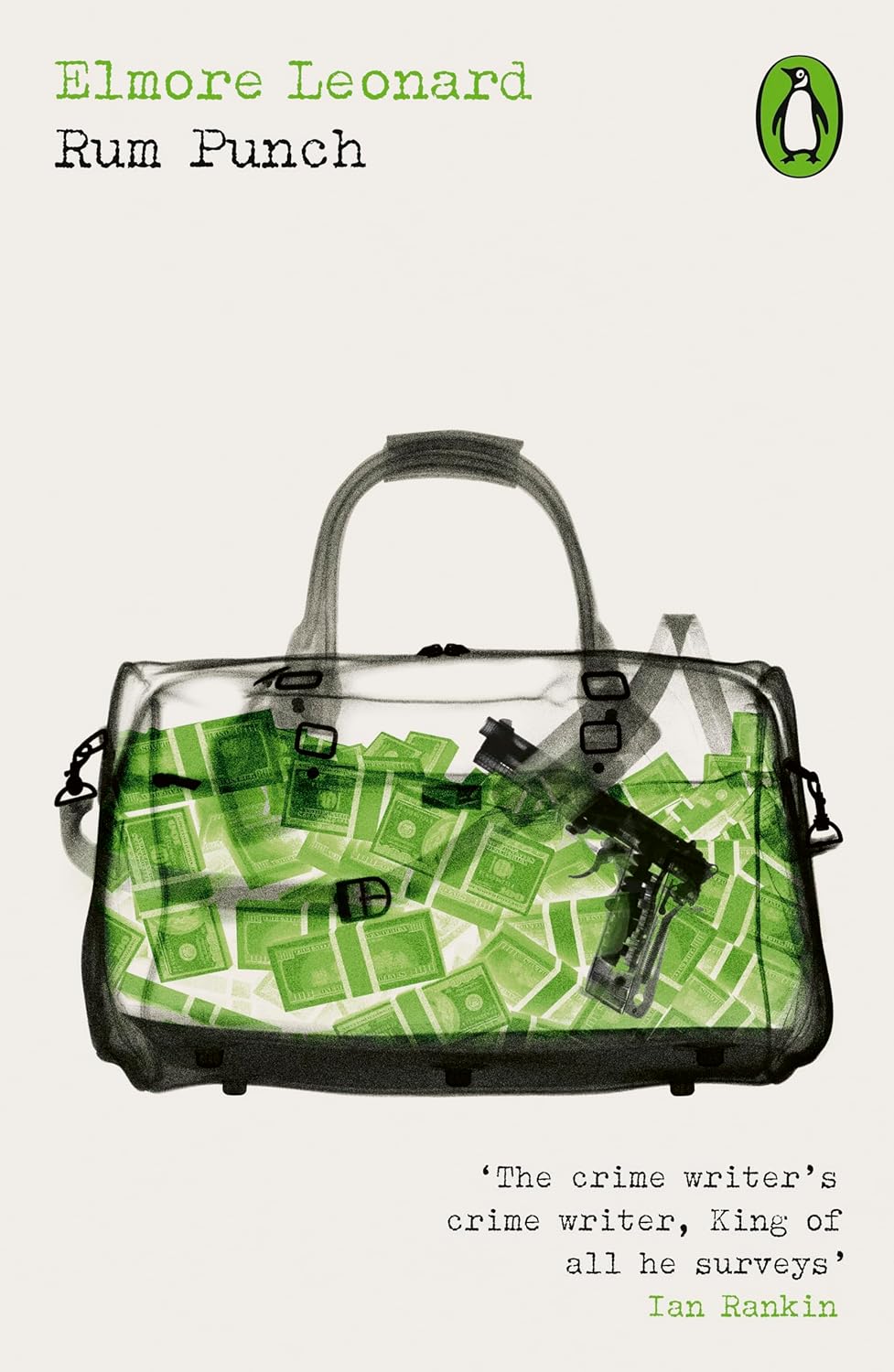
Rum Punch by Elmore Leonard
Jackie Burke is an air stewardess caught smuggling $51K cash into Miami from Jamaica. The feds want her to name names, and the name they want is Ordell Robbie. Ordell Robbie considers himself a smooth operator, selling fashionable weapons to easily impressed clients for a healthy markup. He did time once, a long time ago, and reckons he is too good to do it again. So Ordell bails out Jackie using the services of the bail bondsman with a heart of gold, Max Cherry, intending to kill her before she can testify. With Jackie dead, and unable to testify against her, he can simply collect his deposit from Max.
Problem is that Ordell has just pulled this exact trick with another of his subordinates. The ATF agents leaning on Jackie know this, and they make sure that Jackie knows this because they want her to flip. Max knows this because he served the bond for the last guy. Everyone knows and they all know that they all know. So what is going to happen? What follows is an elaborate chess game with all the players playing off each other, vying for half a million dollars that Ordell has stashed away in Jamaica. And to make everything really interesting, everyone is horny.
It is hard to read this without keeping Tarantino’s film adaptation in mind. There are changes, the most significant being the casting of Pam Grier as Jackie Brown, while Jackie Burke was written and coded as white. This change was utter genius, and leaves the Jackie Burke of the novel scrambling to survive in the reader’s estimation even as she scrambles to survive Ordell’s murderous designs. The other major cut is a neo nazi subplot which adds more than I expected to the characterization of Ordell and his partner Louis, but ultimately felt like a deleted scene.
Leonard is rightly regarded as a master of the craft, and I read the recently released Penguin Crime & Espionage Classics reprint. I only wish that I had been able to find one of the other two reprints in the airport bookstore; those remain unadapted, and only more enticing for the fact. This is a rare thing: a book that suffers from the film adaption both adhering loyally and creatively surpassing the source material.